
BEYOND THE DIRECTORY
Find your class skills, understand their effects and SP costs, and use the skill panel to manage upgrades. Skill-level values and costs tied to a particular class setup have different conditions, so read those alongside each entry.
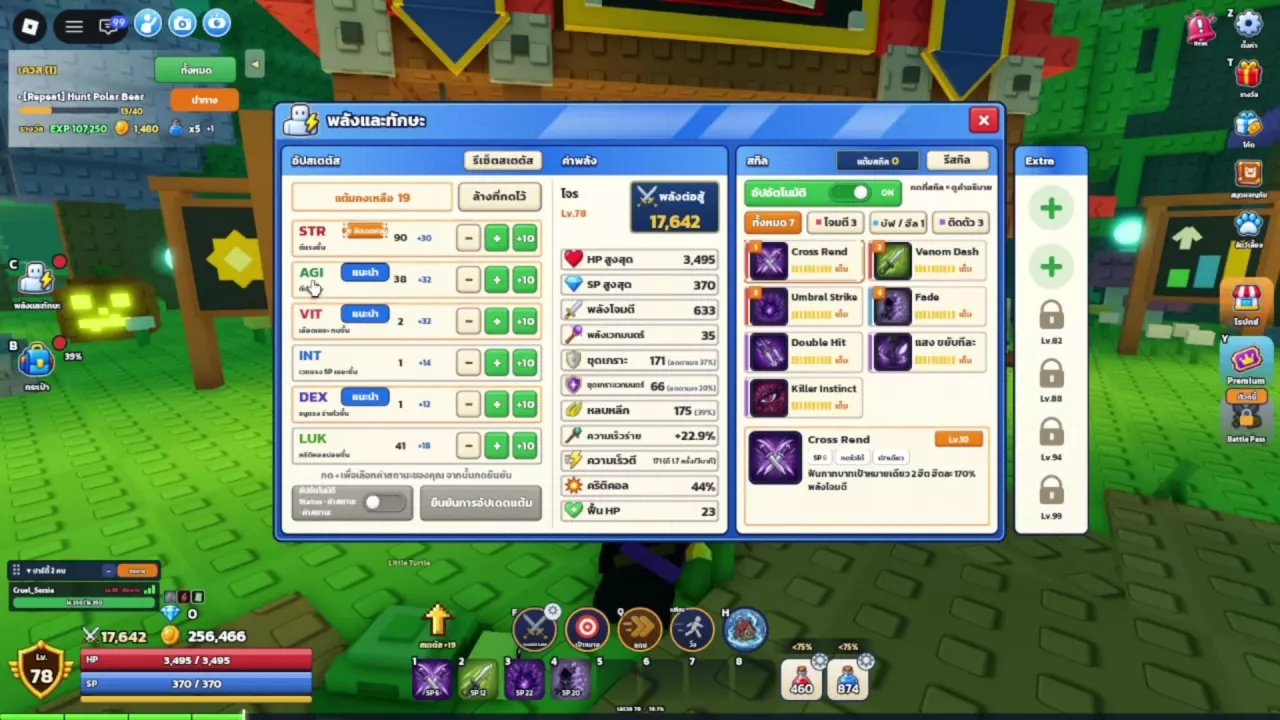
Open the stats and skills panel through the left-side C entry. Upgrade a skill before casting it, or enable the skill section’s separate automatic-upgrade switch. At skill level 10, Cross Rend costs 6 SP and hits one enemy twice for 170% physical attack per hit. Cleric uses Grace for buffs, Mending Light for healing, and Second Dawn to revive teammates without a revival item. The skill-reset control is in the skill section.
Browse Skills and Their Class Roles
Search for a skill by name and open More details for its effects, class relationship, and conditional values. Use the type filter to narrow the directory to the kind of ability you need.
Choose skills around the fight: area attacks help against groups, single-target attacks focus one enemy, and control effects can interrupt pressure. Defensive and healing skills serve a different purpose from raw damage, so include survival and party support in your choices.
For stat priorities and weapon directions that complement these abilities, see the builds for all six classes.
Read Damage and SP at the Listed Skill Level
Cross Rend at skill level 10 costs 6 SP and strikes one enemy twice, with each hit dealing 170% of physical attack. The percentage applies to each hit; it is not a flat 170 damage or a 170% total across both hits.
Crushing Blow at skill level 10 costs 8 SP, deals 270% of attack to one target, and has a 25% chance to stun for 2 seconds. The stun duration applies when the stun succeeds. Cross Rend offers a two-hit damage option for Thief, while Crushing Blow gives Swordsman a chance to add control to its attack.
Keep skill level separate from character level. A cost labeled for a level 99 combat-bar configuration describes that setup; it does not establish a level 99 requirement to use the skill. Check the selected skill’s details and your combat bar for its SP cost and cooldown.
Fade makes the Thief translucent, produces a purple effect, and starts a cooldown; its listed Thief combat-bar configurations cost 20 SP. A combat-power increase from one setup is not a fixed bonus for every build. Double Hit appears in the Thief skill list and can produce a “Double Hit!” prompt during attacks on a Training Dummy. Use the training dummy and combat-power guide to locate the dummy and read combat feedback.
Healing, Buffs, and Revival
Cleric’s support skills address three different needs:
- Grace: Apply a buff. Casting produces light around the character and adds a status icon.
- Mending Light: Restore health to yourself and nearby teammates. The cast uses a progress bar, so account for casting time when deciding when to heal.
- Second Dawn: Revive a fallen teammate without consuming a revival item.
Use healing while teammates are alive and injured; use revival after a teammate falls. These abilities make Cleric useful when your group needs sustained support. See the party guide for invites, EXP sharing, and team roles.
Upgrade Skills Before Casting
- Open the stats and skills panel through the C entry on the left side of the screen.
- In the skill section, choose All, Attack, Buff/Healing, or Passive to narrow the list.
- Select a skill to inspect its level, SP cost, and effect.
- If casting produces a prompt that the skill has not been upgraded, open the Skill page and upgrade it before trying again.
- Turn on the skill section’s automatic-upgrade switch if you want automatic skill upgrading.
Skill auto-upgrading is separate from automatic stat allocation. Turning on one does not turn on the other. The combat skill bar displays SP costs and cooldowns when you use abilities; configuring their automated casting order is covered in the auto battle settings guide.
To find the skill-reset control, open the same C panel and look in the skill section.
The Swordsman list also includes Blade Training, Second Wind, and Steel Skin; the Thief list includes Killer Instinct. Select an entry in the panel to inspect it.
Shared Passives and Extra Slots
Training other classes can strengthen your main class through shared passive abilities. A practical progression is to finish leveling your main class, then develop other classes for their shared passives. Use the class-changing guide when you are ready to switch.
The Extra section beside the Thief skill panel has two plus-button positions in the level 78 setup pictured above. Four further positions carry unlock labels of Lv.82, Lv.88, Lv.94, and Lv.99. These are the level milestones displayed for those Extra positions, not the skill levels of the abilities in the main list.